
We’re living through a historic moment for sea turtles.
Most people don’t know it, but sea turtles already live along our coast. And this fall, for the first time ever recorded, a sea turtle came ashore here to lay its eggs, on the same stretch of sand where we clean.
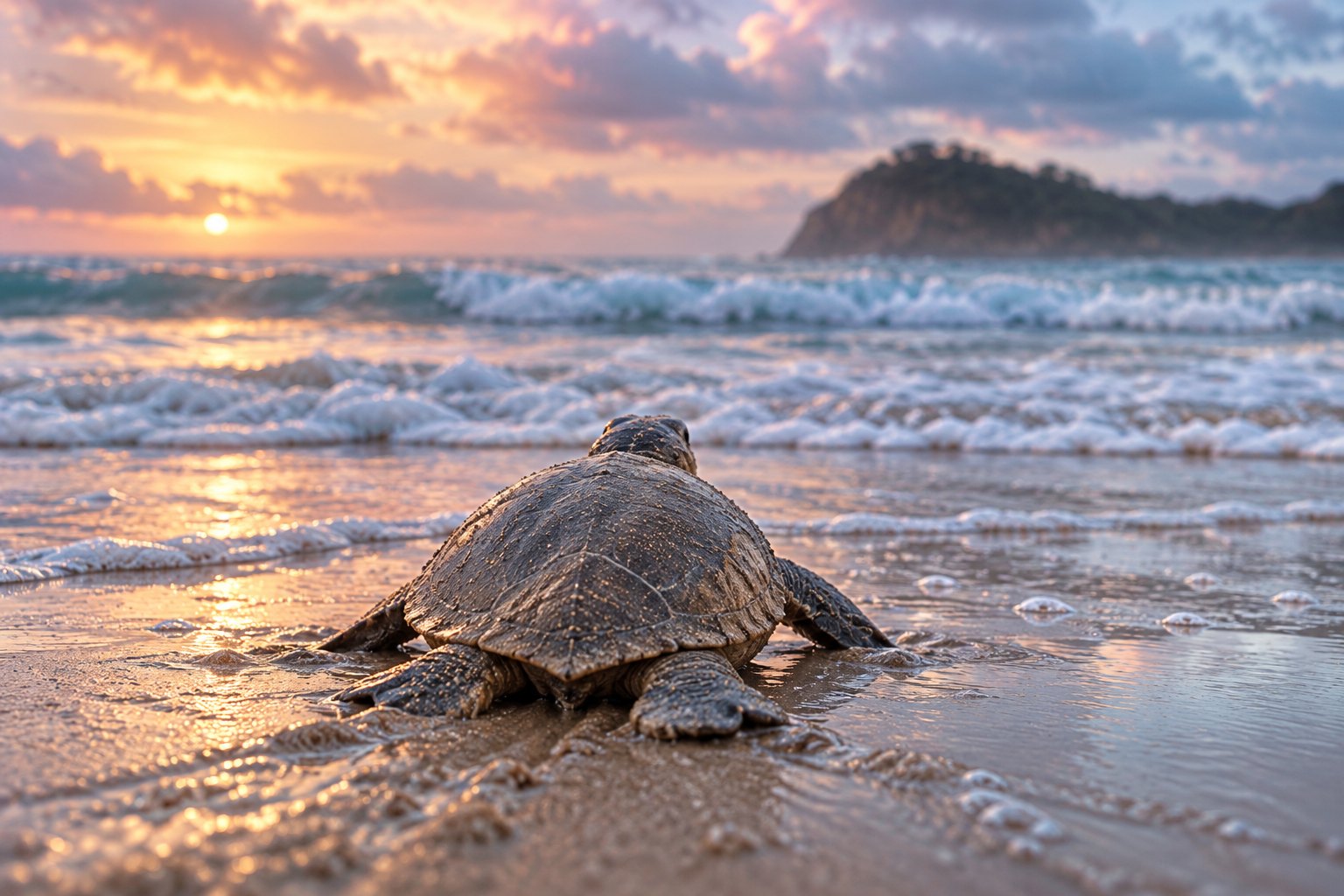
- Sept 16, 2026Seal Beach · SurfsideAn olive ridley sea turtle digs a nest and lays eggs on the sand at Surfside, near Seal Beach. NOAA Fisheries confirms it’s the first natural sea turtle nesting ever recorded on the U.S. West Coast.
- Sept 19, 2026Huntington Beach PierA few miles south, a second nest. Biologists don’t yet know if it was the same turtle or a second one.
- NowIncubatingBoth nests are fenced and watched by local, state and federal teams. Incubation typically runs 45 to 60 days.
- Late Oct to mid NovPossible hatchingIf the eggs develop, hatchlings would make their run to the ocean in this window. No one knows yet. It’s never happened here before.
The olive ridley
The smallest sea turtle in the Pacific, named for its olive-green, heart-shaped shell. Olive ridleys normally nest far to the south, in Mexico, Nicaragua, Costa Rica and Panama, often arriving by the thousands at once. They’d never been documented nesting anywhere in the United States.
Scientists link this year’s visit to unusually warm ocean water from a strengthening El Niño, which has been pulling warm-water animals up our coast.
- Size
- 2.5 to 3 ft long
- Weight
- Up to ~100 lbs
- Lifespan
- 30 to 50 years
- Status
- Protected under the Endangered Species Act
The green sea turtles of Long Beach
Just up the coast, in the San Gabriel River where it meets the ocean between Long Beach and Seal Beach, lives Southern California’s densest population of green sea turtles. It’s the farthest north Pacific green turtles are known to live.
Aquarium of the Pacific volunteers first documented them living there year-round in 2008. Warm water from nearby power plants, algae on the rocks, and bridge pilings to rest under make it a safe spot. Most are adolescents; adults can grow to about 4 feet, 400+ pounds, and live 80 years.
Twenty years ago there were only a few. Today volunteers count dozens in the river at once, one of Southern California’s best wildlife comeback stories.
- Where
- San Gabriel River, Long Beach / Seal Beach
- Documented since
- 2008
- Diet
- Seagrass & algae
- Top threat
- Fishing line & hooks
Why Sunset Beach & Surfside matter right now
Our beaches sit right between the river the green turtles call home and the new nests at Surfside and Huntington Beach. What washes up on our sand is what they swim through.
Plastic looks like food
Nurdles, foam and bag fragments are easy to mistake for a meal, for turtles and the fish and birds around them.
Line tangle injuries
Fishing line and hooks are the injuries rescuers see most often in local turtles.
Hatchlings need a clear path
If eggs hatch, tiny turtles have to cross the sand to the water. Debris on the beach is an obstacle course.
Between two wildlife refuges
Our stretch of coast runs from Seal Beach National Wildlife Refuge in Anaheim Bay to Bolsa Chica Ecological Reserve, home to endangered birds, and even green sea turtles of its own. The turtles are why we started; they’re not the only ones we clean for.
California least tern
A tiny seabird that nests right on open sand at Seal Beach National Wildlife Refuge next door and at Bolsa Chica. Litter and disturbance on the beach put chicks at risk.
Western snowy plover
Palm-sized shorebirds that lay camouflaged eggs in shallow scrapes on the beach. They depend on clean, undisturbed sand at Bolsa Chica and nearby beaches.
Light-footed Ridgway's rail
A secretive marsh bird of the Seal Beach refuge and Bolsa Chica wetlands. What floats out of the bay and back onto our beach passes through its home.
Pelicans & shorebirds
Brown pelicans, gulls, sandpipers and more feed along our surf line every day, and are some of the animals most often caught in fishing line.
Sea lions, seals & dolphins
Marine mammals feed just offshore. Nets, line and plastic that leave the beach end up in the water they hunt in.
Grunion & sand crabs
Grunion spawn on our beaches on spring and summer nights; sand crabs live in the wash zone. Microplastics and nurdles end up in the same sand.
Give it space. Then call it in.
- Stay well back and never touch, feed, chase or move a turtle, seal or bird.
- Never step inside the fencing or move the signs around a nest.
- Sea turtles & dolphinsNOAA West Coast stranding hotline (24/7)562-506-4315
- Seals & sea lionsPacific Marine Mammal Center949-494-3050
- Injured birds & wildlifeWetlands & Wildlife Care Center, Huntington Beach714-374-5587
- KTLA: Sea turtle nests on Southern California beach for first time in recorded history (NOAA Fisheries)
- AP: Sea turtle eggs laid on California beaches are a first for the U.S. West Coast
- FOX 5: Olive ridley sea turtles nest on U.S. West Coast for the first time
- Aquarium of the Pacific: Southern California Sea Turtle Monitoring Project
- LAist: Green sea turtles are thriving in the San Gabriel River
- U.S. Fish & Wildlife Service: Seal Beach NWR threatened & endangered species
- Bolsa Chica Ecological Reserve
- Wetlands & Wildlife Care Center of Orange County
- Pacific Marine Mammal Center
- NOAA: Monitoring green sea turtles in the San Gabriel River